
Emergency Chimney Sweep Near Me: What Soundview Homeowners Should Do First
If smoke is pushing back into your living space, calling a chimney sweep is the third thing you should do, not the first. The first two things take under two minutes and may clear the immediate hazard on their own. Most chimney emergencies we get called about in Soundview turn out to be one of three situations: a smoke problem, an active chimney fire, or storm damage you spot from the yard. Each one calls for a different first move. If you’d rather talk it through with someone before you touch anything, call (866) 947-9290 and we’ll help you sort out what you’re looking at.
Key Takeaways
- Smoke backing into the room is usually a draft problem, not a fire. Close the damper, open a window, and check for a competing exhaust running.
- An active chimney fire means evacuate, call 911, and never throw water into the firebox.
- After a storm, inspect the exterior from the ground before lighting anything.
- Most “emergency” calls don’t need after-hours pricing. They need a correct first move and a same-day or next-day inspection.
Smoke in the Room: What to Do in the First Two Minutes
Smoke rolling out of a fireplace is the single most common reason Soundview homeowners search for an emergency sweep. The first move is to close the damper so the smoke stops feeding back into the room, then open a nearby window to give the smoke somewhere to go. Next, check whether a bathroom fan, kitchen exhaust hood, or dryer is running. Any of those pulls air out of a tight house fast enough to reverse the draft on a chimney, and shutting one off can settle the problem within a minute.
A few other things worth checking once the smoke clears:
- Was the flue warm yet? A cold flue can refuse to draw until it warms up. That’s especially true on a mild day when the temperature difference between the house and the outside air is small.
- Is the damper actually open? It sounds obvious until it happens to you. Reach up and confirm.
- Is the wood dry? Wet or green wood smolders and smokes instead of burning hot.
- Is the chimney cap blocked? A nest, a leaf pack, or a collapsed tile can close the top off. You can often spot this from the ground with binoculars.
If the smoke clears and stays clear, you don’t have an emergency. You have a draft or blockage issue that warrants a proper inspection. If smoke keeps coming back, stop using the fireplace and get someone out to look at it. This is the situation where a standalone inspection earns its keep, because the answer is diagnostic, not a cleaning job.
Active Chimney Fire: The One Situation That Really Is an Emergency
A chimney fire is different from smoke backup, and it’s the one case where the order of operations matters most. Get everyone out of the house and call 911 first. Don’t try to fight it yourself, and never pour water down the flue or into the firebox. Water hitting a fire that hot can crack clay tile liners and send steam and debris back at you.
Signs of an active chimney fire include:
- A loud roaring or rumbling that sounds like a freight train inside the chimney.
- Dense smoke or flames visible at the top of the chimney.
- Popping and cracking noises from the flue.
- Metal components like a damper or cap glowing or warping.
Some chimney fires are quieter and burn slow, which is actually the harder case. A slow-burning fire can do real damage to the flue without the drama. After any suspected chimney fire, even a small one the fire department extinguishes quickly, don’t light another fire until the flue has been inspected. The heat can crack clay tiles and open gaps that later let smoke and carbon monoxide into the house. In Soundview’s older multifamily buildings, a shared flue with a cracked tile is a problem for more than one unit.
Post-Storm Damage: Assess From the Ground Before You Light Anything
After a heavy wind or ice storm, walk the yard and look at the chimney from the ground with binoculars before you use the fireplace. You’re checking for a tilted cap, a missing spark arrestor, loose mortar at the crown, cracked brickwork, or a flue tile sticking up crooked at the top. Any of those means stop until someone looks at it up close.
Storm damage tends to show up in a few predictable places:
- The crown – the concrete cap at the very top that sheds water. Cracks here let water into the masonry, and repeat freeze-and-thaw cycles widen them.
- The cap and screen – a loose or missing cap opens the flue to rain, birds, and squirrels.
- Mortar joints – the soft material between bricks. Once it crumbles, bricks loosen.
- Flue tiles – a cracked or shifted tile is a serious finding. It’s what lets heat reach the surrounding structure.
Water is the slow killer of masonry, and a damaged crown is the most common entry point we see. Repairing the crown and cap early is far less expensive than rebuilding the top of a chimney later. That’s why we treat chimney cap & crown work as an asset-protection job rather than a cosmetic one.
What a Technician Actually Does on an Emergency Call vs. a Standard Appointment
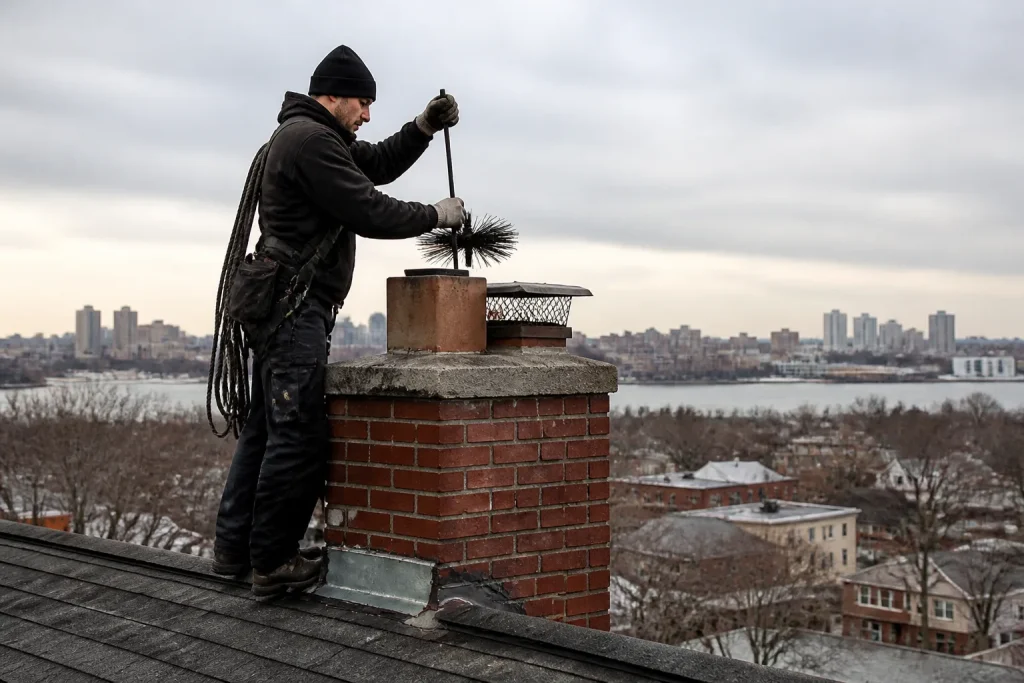
Here’s the part most homeowners don’t hear: an emergency dispatch and a standard appointment often involve the same toolbag. A technician arriving for a smoke-back call inspects the flue, checks the cap and damper, tests the draft, and runs a camera down the flue if something looks off. A standard sweep appointment does the same, plus the actual cleaning. The difference is usually timing, not scope.
That’s why we’re upfront about which calls justify urgency and which don’t. A blocked flue with smoke coming into the room warrants prompt attention. A slightly smoky fireplace you haven’t used in a month can wait for a normal slot. Putting a technician out on a run for a problem that isn’t urgent costs you money for no added safety. Our technicians have up to 15 years of experience, and the experienced ones will tell you plainly when a job can safely wait until the next opening.
When it’s time to book a chimney sweep, a standard appointment gets a full cleaning plus a look at the flue, cap, crown, and firebox. Our inspection is offered as its own service, not bundled as a loss-leader to trigger upsells. You’ll get a straight description of what we found and a set of options, and the written estimate sets the final price.
Same-Day Repair in Soundview: What Makes These Emergencies More Likely Here
Soundview and the wider South Bronx have housing patterns that make certain chimney problems more common than they’d be in a detached suburban house. Two of them matter most.
Shared flues in multifamily buildings. When several units share one chimney, each connected appliance pulls on the same draft. If one unit adds a fan or a new appliance, it can reverse the draft for a neighbor. A smoke complaint from one apartment can come down to an exhaust fan running two floors away. Diagnosing this requires checking the whole flue, not just the fireplace in question.
Aging clay tile liners. Clay tile was the standard flue liner for decades, and much of the housing stock here still has it. Over time, heat cycling and moisture cause tiles to crack or separate at the joints. That’s the setup for both smoke leaks and chimney fires. Where a liner is damaged but the structure is sound, restoring it with a product like HeatShield is often possible without tearing the flue apart. Other jobs call for a proper reline, and we work with Chimney Sweep Soundview‘s professional-grade materials including DuraFlex and Olympia Chimney rather than hardware-store substitutes.
For structural problems, chimney repair covers the crack, the crumbling mortar, and the damaged crown, so the whole system is handled by one team instead of juggled between contractors.
How to Describe Your Chimney When You Call
When you call, be specific enough that the technician arrives with the right equipment the first time. Every detail you give over the phone narrows down the truck load and the diagnosis, and saves a second trip. Have these ready:
- What you saw: smoke in the room, a smell, debris in the firebox, or damage outside. Say which.
- When it started: only when the fireplace was lit, or all the time?
- What kind of fuel: wood-burning or gas. This changes the tools and the inspection.
- Your building type: a single-family house or a shared-flue multifamily unit. If shared, note if a neighbor has the same issue.
- Anything that changed: a new exhaust fan, a stove replacement, a storm.
- Access notes: roof access, ladder placement, anything that affects getting to the cap.
If you don’t know the terminology, describe it in plain words. “Black soot on the bricks around the damper” or “the cap looks crooked from the driveway” tells us more than any technical term.
Documentation You’ll Want if This Becomes an Insurance Claim
Chimney fires and storm damage often turn into insurance claims, and the record you keep in the first days matters. Gather it early:
- Photograph the damage from multiple angles, including the exterior and the firebox.
- Keep the fire department’s report number if they were called.
- Write down the date and time of the event and what you noticed first.
- Save any receipts for emergency work or temporary repairs.
- Get a written inspection report after the event. We provide a camera inspection and photo report so you have evidence you can see for yourself, not just a description.
Some events don’t need the insurer at all, and saying so is the honest answer. But if a claim is likely, the documentation above makes the process far less painful. When you’re ready to have someone look, we’re glad to inspect and hand you a clear report.
The Bottom Line
Most chimney “emergencies” in Soundview are a smoke backup, a real chimney fire, or storm damage, and your first move depends on which one you’re looking at. Smoke in the room means close the damper, open a window, and cut any competing exhaust. A chimney fire means evacuate and call 911. Storm damage means look from the ground and don’t light anything until it’s checked. If you’re unsure, call rather than guess. We answer 24/7. Fast dispatch from 7am to 7pm, Sunday through Friday, and a call outside those hours gets booked into the next opening. If you’re in Soundview and need help, Chimney Sweep Soundview offers free estimates. Call (866) 947-9290.
Frequently Asked Questions
Usually not. Smoke backing into the room is most often a draft problem you can settle by closing the damper, opening a window, and turning off any exhaust fan running. If the smoke keeps coming back after that, stop using the fireplace and book an inspection. Call (866) 947-9290 for an exact quote, and estimates are free.
A wood-burning chimney generally needs sweeping once a year of active use, or sooner if you notice heavy creosote buildup. Gas fireplaces typically need less frequent cleaning but still need an annual inspection. The honest answer depends on how much you burn, so an inspection settles it. Call (866) 947-9290 for an exact quote, and estimates are free.
A fire can crack clay tiles and open gaps in the flue without any visible damage in the room. Those gaps let smoke and carbon monoxide into the house, and another fire can spread into the surrounding structure. Get the flue checked before you light another fire. Call (866) 947-9290 for an exact quote, and estimates are free.
We can narrow it down, but we won’t guess at a diagnosis you can’t verify. What we can do is help you decide whether it’s urgent, and what to do while you wait. Nothing gets recommended until a camera inspection shows it. Call (866) 947-9290 for an exact quote, and estimates are free.
Written by the team at Chimney Sweep Soundview.
Need Chimney Cleaning Help?
Call Chimney Sweep Soundview - the local pro we connect you with is licensed and insured, here with fast help in Soundview.
(866) 947-9290