
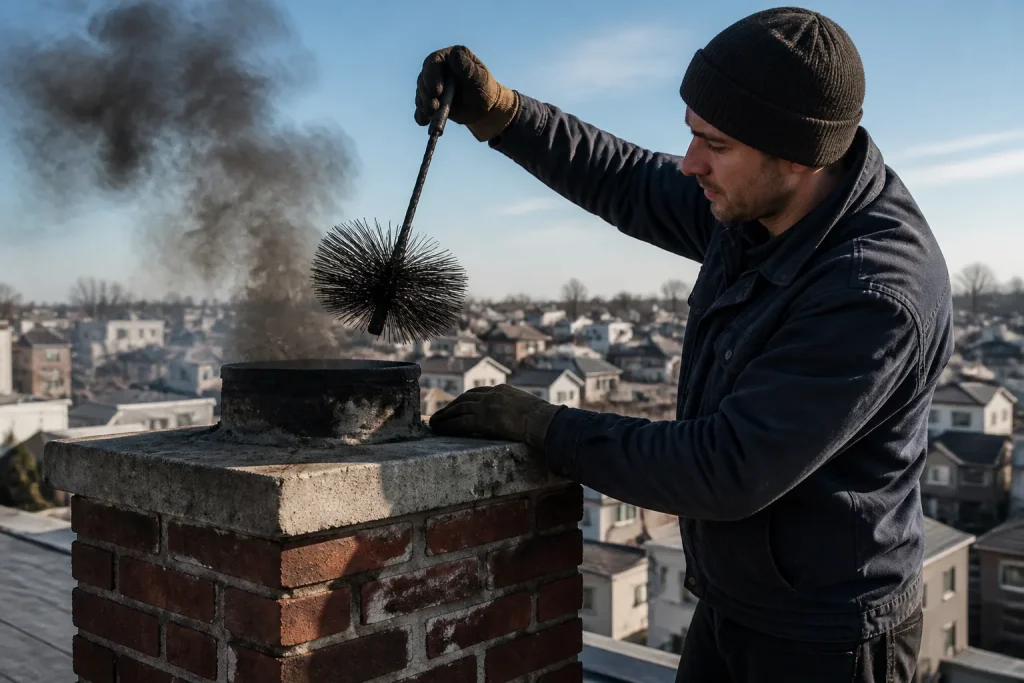
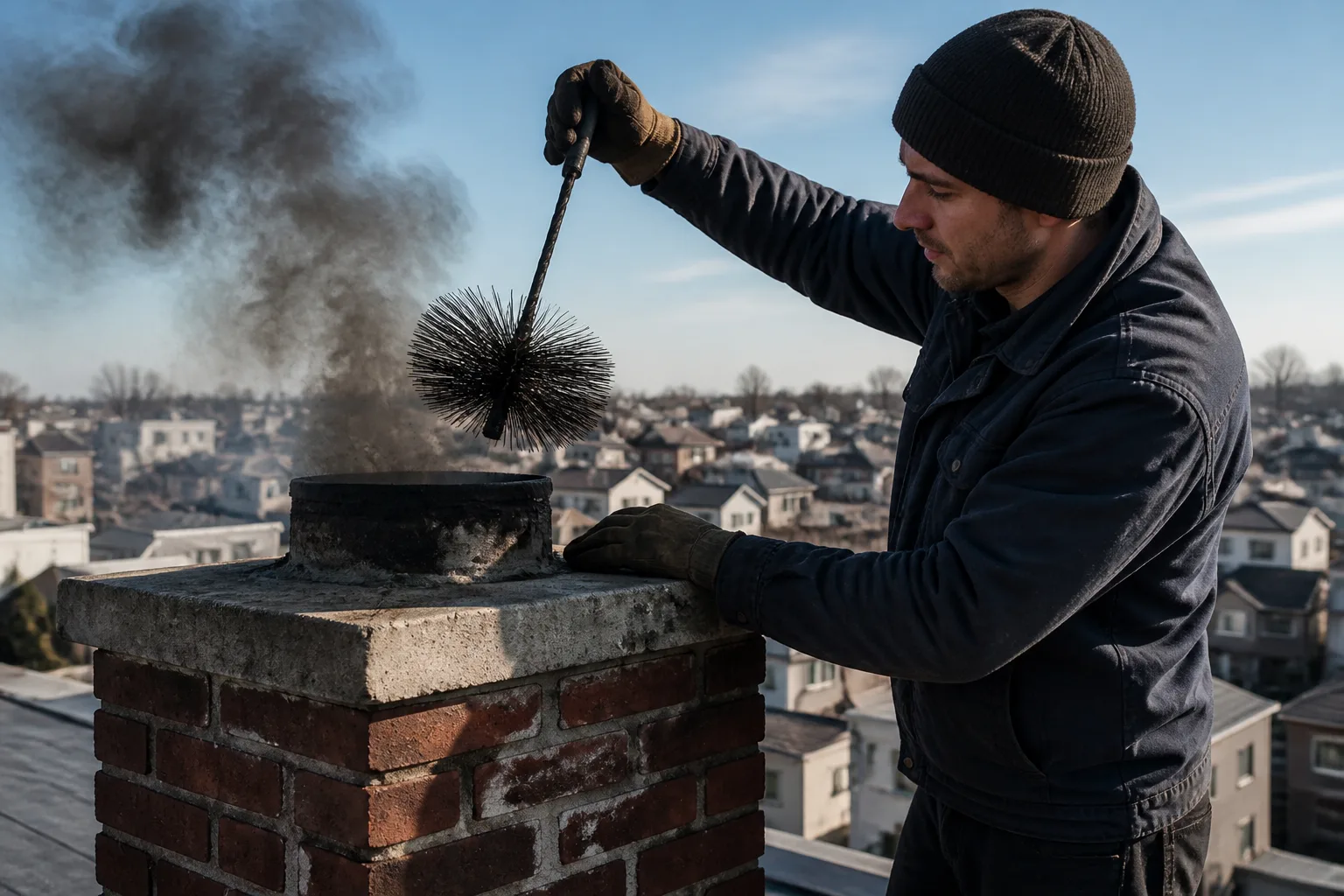
Top Signs You Need Chimney Cleaning Service – Don’t Ignore These
If your chimney is smoking or smelling, you’re already late to the party. Smoke rollback and odor are the last clues to show up, not the first. The signs worth knowing are quieter – a white crust on the brick, a damper that feels different in your hand, a scatter of debris in the firebox. In our work around Soundview, those small observations tell us more about what’s happening inside a flue than a room full of smoke ever could.
Here’s the short answer: you likely need a cleaning when you see visible debris in the firebox, a change in damper behavior, white mineral staining on the exterior masonry, or a smell that lingers after the fire is out. If you’d rather not climb up on the roof to figure it out yourself, call (866) 947-9290 and we’ll take a look.
Key Takeaways
- Efflorescence (white staining) on the brick tells you water is moving through the masonry, and it never means “cosmetic only.”
- A damper that resists opening or won’t seat closed can mean debris on top of it or a liner that has shifted.
- The smell changes as creosote builds. Stage 1 is faint. Stage 3 is a sharp, sour, tar-like smell that doesn’t leave.
- What’s sitting in your firebox is a message. Nesting material, tile chips, and mineral flakes each point to a different problem above.
- How often you burn is a poor guide to cleaning. Fuel, appliance, burn habits, and flue shape matter more.
Why the Standard “Smoke and Smell” List Is Already Too Late
Most articles about cleaning your chimney lead with smoke and odor. That’s not wrong, it’s just late. By the time your fireplace smokes into the room, the blockage or the buildup has already reached the point where it’s changing how the system drafts. It’s the chimney equivalent of waiting for a check-engine light when the tire was clearly low a month ago.
The useful signs are structural and behavioral, and they’re all things a homeowner can see or feel without tools. Soundview’s older homes in particular tend to show these signs early because moisture in the brick is a slow, patient thing.
What we look for, in order of how early it tends to appear:
- White staining on the outside brick – water moving through the masonry.
- Damper resistance or incomplete closure – debris or a shifted liner.
- A changing smell profile – creosote building in stages.
- Debris in the firebox – each type points somewhere different.
- Visible gunk at the smoke chamber – the part most of us can’t reach, which is exactly why a sweep exists.
None of these are dramatic. All of them are cheaper to address now than after the problem gets loud. If you’re in Soundview and want a professional eye on all five at once, a chimney sweep is the right starting point.
White Staining on Your Brick Is Telling You Something About Water
If you see a white, chalky powder or a crusty bloom on the outside of your chimney, that’s called efflorescence. It forms when water gets into the brick or mortar, dissolves salts and minerals, and then pushes them to the surface as it dries. It looks cosmetic. It isn’t.
Here’s why it matters:
- Water is getting in somewhere. Usually a failed crown, a missing or cracked cap, or mortar joints that have opened up.
- That water is migrating through the same mortar joints that hold your chimney together. Over time the joints erode and the brick face spalls.
- The crown above it is often the source. A cracked crown lets water run down behind the brick and into the flue system, which is a much bigger problem than a stained exterior.
Efflorescence is one of the earliest visible warnings you get, and it’s why we look at chimney cap & crown condition before we ever pick up a brush. A damaged crown is a water problem wearing a structural disguise, and it rarely gets cheaper with time.
A Damper That Behaves Differently Means Debris or a Moved Liner
You touch your damper every single time you build a fire. That makes it the best early-warning sensor in the whole system. A damper that suddenly resists opening, scrapes through its travel, or won’t close flush is telling you something has changed above it.
The usual suspects:
- Debris resting on top of the damper plate. Soot, creosote flakes, or material that has come down the flue. If the damper won’t shut completely, you may be losing heat all winter even when the fireplace is cold.
- A liner that has shifted or buckled. A damaged flue liner can sag or misalign and interfere with the damper mechanism. This is one of the reasons liners matter.
- Rust or seized hardware. Common after water infiltration, which ties right back to the efflorescence above.
If the damper feels different than it did a year ago, get it looked at. In our experience a damper that grabs or hangs usually has a physical cause you can fix, and catching it early means you’re not learning about it during a cold snap.
The Smell Test: What Stage 1, Stage 2, and Stage 3 Creosote Actually Smell Like
Creosote doesn’t arrive all at once. It builds in stages, and each stage has its own smell and its own cleaning response. Knowing the difference helps you decide whether to book a sweep now or wait.
- Stage 1 – soot and light fluff. Faint smell, sometimes a bit of a fireplace odor after a long burn. This is the easy, brush-off stage. A routine sweep clears it.
- Stage 2 – crusty, flaky deposits. Noticeably stronger, sour-ash smell that lingers even when there’s no fire. You might catch it when you open the firebox door. This still responds well to brushing and scraping, but it’s a clear signal to book one.
- Stage 3 – tar-like, glazed deposit. Sharp, pungent, tar-and-varnish smell that fills the room and doesn’t clear out. This is the hard, glassy stage that brushing alone won’t fix. It’s also the stage most closely tied to chimney fire risk.
Once you’re at stage 3, the conversation often shifts toward your liner rather than just the flue itself. Liner restoration with HeatShield can extend the life of your flue without the cost of full replacement, which is worth knowing before anyone tells you it’s a tear-out job.
Debris in the Firebox: A Message About What’s Happening Above
The firebox floor is where your whole chimney gives you its report card. Before you build a fire, take thirty seconds to look. Each type of debris points at a different problem above your head.
- Animal material – twigs, leaves, nesting, droppings. Birds and animals have found an opening. That usually means a missing or damaged cap. Fungi, growth, or material that shouldn’t be in a flue can restrict airflow and add a fire risk. A proper chimney cap & crown stops it.
- Tile or brick chips. The flue liner is deteriorating. A cracked or spalling liner is one of the most serious things you can find in a firebox, because it can let heat and combustion products into the chimney structure.
- White, powdery flakes (efflorescence). Same water problem as the exterior staining, but showing up inside – water is moving through the masonry above the firebox. That’s a structural concern that chimney repair is the right answer for.
- Lots of soot or creosote flakes. Buildup has reached the point where it’s shedding. Time for a sweep.
We tell you what we found, then we give you options. Nothing in your firebox gets a recommendation without you knowing exactly what it means.
Why “How Often You Burn” Is a Poor Guide to Cleaning
Every generic article tells you to clean once a year. That’s a decent default, but it doesn’t fit every home. How often you burn is only one input. What actually determines your cleaning interval:
- Fuel type. Seasoned hardwood produces less creosote than unseasoned or softwood. Never burn trash or green wood.
- Appliance type. A wood-burning appliance, a gas fireplace, and a wood stove behave differently and build up differently.
- Burn habits. Long, slow, smoldering fires build more creosote than hot, active ones. That’s the single most common reason a low-use chimney still needs service.
- Flue geometry. A flue that’s too large, too short, or awkwardly shaped cools smoke faster and deposits more creosote on its surfaces.
A gas fireplace still needs annual attention, even though it doesn’t produce creosote, because water, debris, and the integrity of the liner still matter. On the wood side, an annual professional inspection is the honest starting point, and it tells you whether this year is a cleaning year or not. It’s one of the reasons we offer inspection as a standalone service – you should be able to get a diagnosis without being pushed into a repair.
When to Call a Pro (and When You Can Wait)
We’d rather tell you the truth than sell you a service. Some of what you’re seeing can wait. Some of it really shouldn’t.
You can wait a bit, but get on the calendar: faint soot smell, a slightly stiff damper, or a light dusting of debris in the firebox. None of these are emergencies. A sweep, booked for a normal visit, sorts them out.
Call soon: visible liner chips, persistent white staining, a smell that doesn’t leave after the fire’s out, or any debris on the firebox floor. These are signs something changed, and you should know what it is before winter.
One example of knowing what you’re looking at: we work with the same materials chimney engineers specify – DuraFlex liners, HeatShield for restoration, Olympia Chimney components – because we’d rather give you something that lasts than something convenient. If a report points to major work, you get options, and a second look is fine. We answer 24/7, and fast dispatch runs 7am to 7pm, Sunday through Friday.
The Bottom Line
Don’t wait for the dramatic signs. White staining, a stubborn damper, a changing smell, and debris in the firebox are the early indicators that let you fix things before they get expensive. Our technicians have up to 15 years of experience reading exactly these clues, and our approach is simple: we tell you what we found, then we give you options. We treat your chimney as a full system, from the firebox up to the crown. If you’re in Soundview and need help, Chimney Sweep Soundview offers free estimates – call (866) 947-9290.
Frequently Asked Questions
Most wood-burning chimneys should be swept once a year, or sooner if you’ve burned a lot or notice any of the signs above. How often you burn is a poor guide on its own. Fuel, appliance type, burn habits, and flue geometry matter more. An annual inspection tells you whether this year is actually a cleaning year. Call (866) 947-9290 for an exact quote – estimates are free.
Not necessarily, but it does mean water is moving through the masonry and leaving minerals behind. The fix is usually traced to the crown or the cap. Left alone, the mortar joints and brick eventually degrade. Book a look so you know what’s causing it.
Sharp, sour, tar-and-varnish, and it doesn’t go away after the fire is out. Stage 1 is faint. Stage 2 is a noticeable sour-ash smell. Stage 3 is the hard, glazed stage that brushing alone won’t clear, and it’s the one most tied to fire risk. Call (866) 947-9290 for a free estimate.
You can brush loose soot from the flue, but the parts that matter most – the smoke chamber, the crown, the liner – are what a routine cleaning should actually check. Without a camera or a trained eye, it’s easy to miss the debris and damage that matter. If you’d rather not climb up to find out, call us.
Written by the team at Chimney Sweep Soundview.
Need Chimney Cleaning Help?
Call Chimney Sweep Soundview - the local pro we connect you with is licensed and insured, here with fast help in Soundview.
(866) 947-9290